The CSIR NET Physical Sciences exam for December 2026 is now only weeks away. That is still enough time for a strong attempt. However, it only works if your days are planned, not just busy.
We wrote this guide the way a mentor would plan it with you. First, we explain what the exam tests and where the marks come from. Next, we cover what has changed. Finally, we give you a clear path from today to exam day.
Quick Answer
CSIR NET Physical Sciences is one 3-hour, 200-mark computer-based test with three parts: A, B and C. To aim for JRF, most toppers plan for 5 to 6 months. They also do at least 3 full revisions and 25 to 30 full mock tests before the exam.
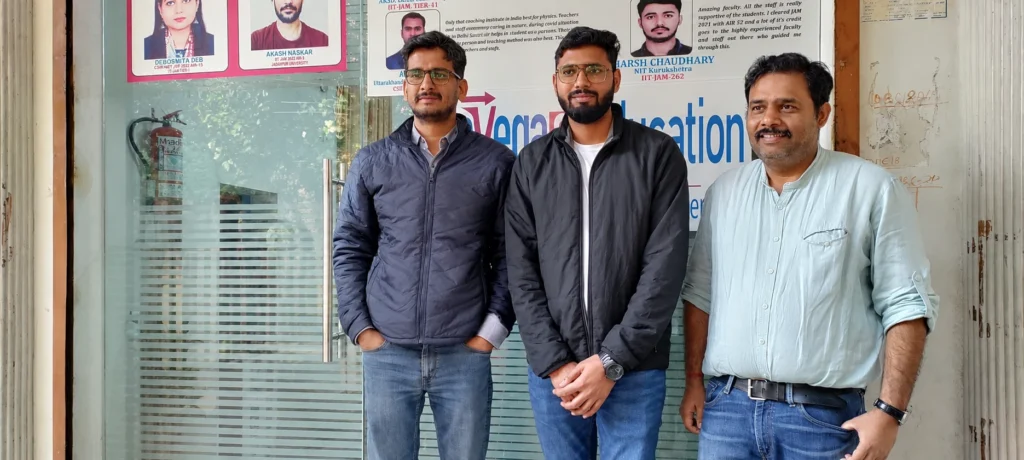
Table of Contents
- CSIR NET Physical Sciences December 2026: Key Dates
- Who Should Take the December 2026 Exam?
- Exam Pattern and Marking Scheme
- The Proposed NAT Change: What We Know
- Syllabus Overview
- Topic-Wise Weightage
- Difficulty Level and Past Trends
- The Full Roadmap
- The Final 8-Week Plan
- Daily Timetable
- Subject-Wise Strategy
- Common Mistakes to Avoid
- Best Books
- PYQ Strategy
- Mock Test Strategy
- Revision Strategy
- Time Management in the Exam
- Staying Calm and Motivated
- The Last 30 Days
- The Last 7 Days and Exam Day
- FAQs
- Conclusion
CSIR NET Physical Sciences December 2026: Key Dates
NTA has released the notice for the December 2026 cycle. Here are the main dates. Still, always confirm them on the official CSIR NET portal.
| Event | Date |
|---|---|
| Last date to apply | 5 November 2026 (11:50 pm) |
| Late fee window | 6 to 9 November 2026 |
| Form correction | 10 to 12 November 2026 |
| Exam days | 19, 22 and 27 December 2026 |
| Shifts | 9 am to 12 noon, and 3 pm to 6 pm |
Who Should Take the December 2026 Exam?
This cycle is a good fit for you if you are in one of these groups:
- Final-year MSc Physics students who want JRF or Lectureship (now Assistant Professor) eligibility right after the degree.
- Students waiting for results, who may apply under the provisional route if they meet the rules.
- Repeat aspirants who took the June 2026 exam and want a better score or rank.
- Working people and PhD hopefuls who missed past attempts, too.
- First-year MSc students who cleared IIT JAM and also want early exam practice.
Pro tip: If you cleared IIT JAM and are in your first MSc year, take this exam even if you are not fully ready. The two exams share a large part of the syllabus. So an early attempt costs you little, but it gives you real exam-day practice.
CSIR NET Physical Sciences Exam Pattern and Marking Scheme
The exam is a single paper. So there is no separate prelims or mains stage. The December 2026 bulletin keeps the same pattern as June 2026:
| Part | Focus | Given | Attempt | Marks Each | Total |
|---|---|---|---|---|---|
| A | General Aptitude | 20 | 15 | 2 | 30 |
| B | Core Physics | 25 | 20 | 3.5 | 70 |
| C | Advanced Physics | 30 | 20 | 5 | 100 |
| Total | 3 hours, CBT | 75 | 55 | – | 200 |
Here are the key facts to remember:
- The paper lasts 3 hours. Also, you can move between parts at any time.
- Besides, it is a computer-based test run by NTA.
- However, each wrong answer loses 25% of that question’s marks, in all three parts.
- Part C carries 100 of the 200 marks. So it decides who gets a JRF rank.
Note: Only answer up to the limit in each part (15 in A, 20 in B and 20 in C). Extra answers are not counted, so do not waste time on them.
The Proposed NAT Change: What We Know
On 13 April 2026, CSIR-HRDG shared a draft plan to revise the syllabus. It also suggested that Part B could move from MCQs to Numerical Answer Type (NAT) questions, with no negative marking. Public feedback on the plan was open until 14 May 2026.
However, the December 2026 bulletin still lists MCQs for all three parts, as reports on it show. So, for now, plan for the usual MCQ pattern. Then check the bulletin on the official portal once more before exam day. For a full look at the draft, read our analysis of the proposed CSIR NET 2026 syllabus and NAT pattern.
How to Prepare Either Way
- Stop guessing answers by working back from the options. Instead, solve each problem to a final number.
- Practise with a basic on-screen style calculator, and always check units.
- Also use NAT questions from IIT JAM and GATE Physics papers. They help in both cases.
Did you know? Solving for an exact answer builds real physics skill, the kind you will need in research. So this habit helps you whether or not NAT arrives.
CSIR NET Physical Sciences Syllabus Overview
The syllabus has about eleven core areas, tested across Parts B and C. Part A is common to all CSIR NET subjects. However, it covers aptitude, not physics: logic, graphs, number skills, series and puzzles.
Meanwhile, the core physics areas are:
- Mathematical Methods of Physics
- Classical Mechanics
- Electromagnetic Theory
- Quantum Mechanics
- Thermodynamics and Statistical Physics
- Electronics and Experimental Methods
- Atomic and Molecular Physics
- Condensed Matter Physics
- Nuclear and Particle Physics
- Special Theory of Relativity
- Other topics (mixed and new areas)
You can get the official syllabus PDF from the CSIR-HRDG website. Then match your plan to the official list, since other PDFs can be out of date.
CSIR NET Physical Sciences Topic-Wise Weightage
Clearly, not every topic needs the same time. Based on recent papers, marks tend to split like this:
| Topic | Approx. Weight | Priority |
|---|---|---|
| Quantum Mechanics | 18 to 20% | Very High |
| Classical Mechanics | 12 to 14% | Very High |
| Electromagnetic Theory | 12 to 14% | Very High |
| Mathematical Methods | 10 to 12% | High |
| Thermo and Stat Physics | 10 to 12% | High |
| Electronics and Experimental Methods | 8 to 10% | High |
| Condensed Matter Physics | 8 to 10% | Medium-High |
| Atomic and Molecular Physics | 6 to 8% | Medium |
| Nuclear and Particle Physics | 6 to 8% | Medium |
| Special Relativity | 3 to 4% | Medium-Low |
| General Aptitude (Part A) | 15% (fixed) | Fixed |
Pro tip: Quantum, Classical and EM Theory make up about 45% of the physics marks. So if time is short, master these three first, and learn them deeply.
Difficulty Level and Past Trends
So, here is what recent papers tell us:
- Part A is easy but rushed. The ideas are simple, yet you must spot patterns fast. As a result, many students lose time here.
- Part B, by contrast, tests direct use of concepts. If your basics are strong, this is where you score most accurately.
- Part C decides JRF ranks. Questions often join two or three ideas, such as quantum with stat physics. Also, you need many steps before you reach the options.
- Old ideas, new form: Many Part C questions test the same physics as past years, but in a new setting. That is why PYQs matter so much. They help you spot the pattern, not memorise the answer.
- Cutoffs move with difficulty. When a paper is hard, cutoffs fall. So aim for steady accuracy, not a fixed “safe” score.
The Full CSIR NET Physical Sciences Roadmap
Overall, a full prep cycle for December has four phases. If you started in July, you are now in the Integration phase. If you are starting late, jump to the 8-week plan below.
| Phase | When | Main Focus |
|---|---|---|
| Foundation | July to August | Build concepts topic by topic, and start topic-wise problems |
| Application | September to mid-October | Part C-level problems, and start PYQs |
| Integration | Mid-October to November | Full mocks, weak areas and timed practice |
| Final Sprint | December | Fast revision, formulas, exam practice and calm |
Month-Wise Plan at a Glance
- July: Rate yourself on all 11 topics. Then start with your two weakest high-weight topics. Begin a one-page-per-topic formula notebook.
- August: Finish a first pass of every topic. Also take a short test after each one, and add 20 minutes of Part A daily.
- September: Move from learning to applying. Solve topic-wise PYQs from the last 8 to 10 years, and take 2 or 3 baseline mocks.
- October: Switch to full past papers under a timer. Then start Revision 1, and take one mock a week.
- November: Take a mock every 4 to 5 days. Meanwhile, run Revision 2 and fix your weakest 20% of topics.
- December: Follow the last-30-days plan below.
The Final 8-Week Plan (Start Here If You Are Late)
With the exam on 19, 22 and 27 December, you have about eight weeks from late October. Here is how to use them:
| Week | Focus |
|---|---|
| 1 (late Oct) | Apply before 5 November. Finish Revision 1, and find weak areas from your mocks. |
| 2 | Then fix weak topics, and take 1 full mock. |
| 3 | Solve the last 5 years of papers under a timer, plus 1 full mock. |
| 4 (mid-Nov) | Part C drills across all topics, plus 1 full mock. |
| 5 | Start Revision 2, and take part-wise mocks (A, B and C). |
| 6 | Also, continue Revision 2, and take 2 full mocks. |
| 7 (early Dec) | Review formulas and your error log, plus 1 full mock. |
| 8 (mid-Dec) | Fast final revision and 2 full mocks. Then ease off before the exam. |
Only eight weeks left? You do not have to plan it alone.
Our CSIR NET Physical Sciences mentors can help you build a week-by-week plan for your weak areas.
Daily Timetable
A routine you can keep matters more than a tough one you drop in two weeks. Here is a plan for 6 to 7 hours a day. So, if you have less time, scale it down.
| Time | Task | Hours |
|---|---|---|
| Morning | New theory, when your mind is fresh | 1.5 |
| Late morning | Problems on the same topic | 1.5 |
| Afternoon | Part A practice and light revision | 1 |
| Evening | Timed PYQs or a mock | 1.5 to 2 |
| Night | Error log and formula notebook | 0.5 to 0.75 |
Pro tip: Study your hardest topic in your best hours. Do not leave tough work for late at night, when you remember less.
CSIR NET Physical Sciences Subject-Wise Strategy
The Big Three: Quantum, Classical and EM Theory
- Quantum Mechanics: Build up from the postulates. Do not just memorise the box, the oscillator and the hydrogen atom. Instead, learn why each step is taken, because Part C loves to twist these setups.
- Classical Mechanics: Give extra time to the Lagrangian and Hamiltonian methods. Also practise setting up new systems, not just solving known ones.
- Electromagnetic Theory: Maxwell’s equations and boundary problems are a must. First get comfortable with vector calculus, since most errors here are maths errors.
Other Core Topics
- Mathematical Methods: Treat it as a toolkit, because strength here helps in every other topic.
- Thermo and Stat Physics: Focus on the partition function and the three kinds of statistics. Once you know the steps, the problems follow clear patterns.
- Electronics: Many students skip it. Yet logic gates, devices and op-amps give easy, clear marks.
- Condensed Matter: Crystal structure, band theory and free electron theory form the core. Also, diagrams help you remember.
- Nuclear and Particle Physics: The weight is lower, but questions repeat a lot. So it is quick to master.
- Special Relativity: Finally, learn the core transforms and four-vectors well, and then move on.
Common Mistakes to Avoid
| Mistake | Why It Hurts | Do This Instead |
|---|---|---|
| Starting PYQs late | You miss the best guide to the real exam | So, begin topic-wise PYQs early |
| Giving all topics equal time | Time goes to low-weight areas | Instead, follow the weightage table |
| No error log after mocks | You repeat the same mistakes | So, write what went wrong, and why |
| Using one book per topic | You see only one style of question | Pair a theory book with a problem book |
| Ignoring Part A | You lose easy marks | Still, practise a little every day |
| Memorising standard problems | Fails when Part C twists the setup | Instead, understand each step |
| Too many notes, too few problems | You feel familiar but cannot solve | Aim for 70% problems, 30% notes |
Best Books for CSIR NET Physical Sciences
| Topic | Book | Author |
|---|---|---|
| Quantum Mechanics | Quantum Mechanics: Concepts and Applications | Nouredine Zettili |
| Classical Mechanics | Classical Mechanics | Herbert Goldstein |
| Electrodynamics | Introduction to Electrodynamics | David J. Griffiths |
| Mathematical Physics | Mathematical Methods for Physicists | Arfken, Weber and Harris |
| Statistical Mechanics | Statistical Mechanics | R.K. Pathria |
| Solid State | Introduction to Solid State Physics | Charles Kittel |
| Electronics | Electronic Devices and Circuit Theory | Boylestad and Nashelsky |
| Nuclear Physics | Introductory Nuclear Physics | Kenneth S. Krane |
| Problem Practice | Problems and Solutions series | Lim Yung-Kuo (Ed.) |
Pro tip: Do not collect books. Finish them. One book solved well beats three books half read. Also, pair each book with PYQs on the same topic. For quick notes, see our free CSIR NET physics notes.
PYQ Strategy for CSIR NET Physical Sciences
Past questions are the most useful resource you have. Here is how to use them well:
- By topic: First, solve PYQs by topic, right after you finish that topic.
- Full papers: Then move to full past papers in a strict 3-hour sitting.
- Weak papers: Finally, redo your weakest papers, and focus only on the questions you got wrong.
- Always review. For each wrong answer, ask: was it a concept gap, a maths slip or time pressure? Each one needs a different fix.
- Cover at least the last 10 years, since many question patterns come back in some form.
Mock Test Strategy
Quick answer: Aim for 25 to 30 full mocks before the exam. If you are starting late, take at least 10 to 12 in the last eight weeks.
| Period | How Often | Type |
|---|---|---|
| September | 2 to 3 in total | Full, to set a baseline |
| October | 1 a week | Full and topic-wise |
| November | 1 to 2 a week | Full and Part C only |
| December | 2 to 3 a week, then fewer | Full exam practice |
Rules That Make Mocks Useful
- First, always use a timer, right from your first mock.
- Also, copy the real exam: 200 marks, 3 hours and negative marking.
- Give Part C your best focus, since it carries 100 marks.
- Review each mock within 24 hours, while your thinking is still fresh.
- Finally, track the trend across mocks, not just one score.
For exam-level practice, try the CSIR NET Physics Test Series by Pravegaa.
Revision Strategy
Plan three rounds of revision. Moreover, each one should be faster than the last.
- Revision 1 (October): Go through the full syllabus at a steady pace. Re-derive key results, and update your formula notebook.
- Revision 2 (November): Then go faster. Focus on formulas, standard steps and problem patterns.
- Revision 3 (early December): Use only your formula notebook and error log. This round should take days, not weeks.
Warning: Do not start new topics in Revision 3. At that stage, what you already know well is worth more than shaky new content.
Time Management in the Exam
- Pick an order: Many toppers do Part C first, while their energy is high. Then they do Part B, and Part A last.
- Set checkpoints: Roughly 50 minutes for Part C, 60 for Part B and 40 for Part A. That leaves time to review.
- Skip and return: If you cannot crack a question in 90 seconds, mark it and move on.
- Know the calculator: Since the CBT screen has a basic calculator, practise with a similar one in mocks.
- Check units: A quick units check before you answer catches many slips in seconds.
Staying Calm and Motivated
CSIR NET Physical Sciences is a hard exam. So it is normal to have slow weeks. Keep these points in mind:
- Steady beats intense. Six hours a day, every day, beats a few 12-hour days followed by burnout.
- Compare with yourself, not with toppers online, since everyone starts from a different place.
- Plateaus are normal. They usually pass once revision joins your scattered ideas together.
- Rest is part of prep. After all, a tired mind makes more slips than a rested one.
- Remember why you started. This exam is the door to a research career. Indeed, the care it asks for is the same care research will ask for later.
The Last 30 Days
| Days Left | Focus |
|---|---|
| 30 to 21 | Fast full revision (Round 3), plus 2 to 3 full mocks |
| 20 to 14 | Then weak topics only, based on your error log |
| 13 to 8 | A full mock every other day, plus formula review |
| 7 to 4 | Light revision and short part-wise mocks |
| 3 to 1 | No new problems. Fix your sleep, and check your admit card. |
The Last 7 Days and Exam Day
- 7 days before: Stop new problems. Review only what you know.
- 5 days before: Then go through your formula notebook one last time.
- 3 days before: Next, take one light part-wise mock to stay sharp.
- 1 day before: Stop studying by early evening. Pack your admit card and ID. Then sleep at your usual time.
Exam Day Checklist
- First, carry a printed admit card and a valid photo ID.
- Then reach the centre 45 to 60 minutes early.
- Use the attempt order you practised in mocks. Do not change it on the day.
- Also, keep the last 10 minutes for review.
- If a question looks strange, stay calm. Mark it and move on.
Did you know? By December, your exam plan should feel like a habit, not something new. That is why timed mocks matter so much. By exam day, the format itself should feel normal.
CSIR NET Physical Sciences: Frequently Asked Questions
When is the CSIR NET Physical Sciences December 2026 exam?
The exam is on 19, 22 and 27 December 2026, in two shifts. You can apply until 5 November 2026 on csirnet.nta.nic.in.
Is 5 months enough to prepare for CSIR NET Physical Sciences?
Yes, for most MSc students with sound basics. Five to six months of focused study is enough for a strong score. However, the plan must include PYQs, mocks and several revision rounds.
Can I still prepare in 8 weeks?
Yes, if you already know the basics. Focus on the big three topics, PYQs and 10 to 12 full mocks. Also, do not try to learn every new topic at this stage.
What is the CSIR NET Physical Sciences exam pattern?
It is a single 3-hour, 200-mark CBT. Part A has 30 marks, Part B has 70 and Part C has 100. Each wrong answer loses 25% of that question’s marks.
Has the exam pattern changed for December 2026?
CSIR-HRDG proposed NAT questions for Part B in April 2026. Still, reports on the December 2026 bulletin show MCQs in all parts. So check the official bulletin to be sure.
How many PYQs should I solve?
Cover at least the last 10 years of CSIR NET Physical Sciences papers. First solve them by topic, and then as full timed papers.
Which topics carry the most marks?
Quantum Mechanics, Classical Mechanics and EM Theory make up about 45% of the physics marks. So they deserve the most time.
How many mock tests should I take?
Aim for 25 to 30 full mocks over a full cycle. If you are starting late, take at least 10 to 12 before the exam.
What is the minimum qualifying percentage?
Usually, General, EWS and OBC candidates need at least 33%, and SC, ST and PwD candidates need 25%. JRF cutoffs, though, are often higher and change each session.
Is coaching necessary for CSIR NET Physical Sciences?
No, it is not a must. Still, good mentors, doubt sessions and a test series can help you find and fix weak areas much faster than self-study alone.
Which books are best for CSIR NET Physical Sciences?
Zettili for Quantum, Goldstein for Classical, Griffiths for EM Theory, Arfken for Maths, Pathria for Stat Mech and Kittel for Solid State are the usual picks.
How is CSIR NET different from GATE Physics?
Both test similar core physics. However, CSIR NET has three parts, with more weight on hard Part C questions, while GATE mixes MCQ, MSQ and NAT. Also, read our GATE vs CSIR NET vs JAM comparison.
What is a good JRF target score?
Ranks change with difficulty. Even so, scoring over 100 out of 200 in mocks, with strong Part C accuracy, is a healthy target.
Should I attempt Part C before Part B?
Many toppers do, since Part C carries 100 marks and needs your best focus. But use the order that works best in your own mocks.
Where can I download the official syllabus?
You can get it from the CSIR-HRDG website (csirhrdg.res.in) or the NTA portal (csirnet.nta.nic.in). Always prefer the official source.
Conclusion: Plan Your CSIR NET Physical Sciences Attempt Today
You still have time to turn scattered study into a strong CSIR NET Physical Sciences attempt. The key is to follow a plan instead of waiting for motivation. First, fix your weak areas. Then lean on PYQs and timed mocks. Finally, let December be about revision, not last-minute learning.
This exam rewards the same habits that make a good physicist: clear concepts, careful steps and the patience to solve rather than guess. So build that habit now, and December will feel like a checkpoint, not a race.
At Pravegaa Education, this is how we teach. Our founders, Atul Gaurav (Quantum Mechanics, Mathematical Physics and Classical Mechanics) and Dr. Alok Shukla (Electrodynamics and Statistical Mechanics), built Pravegaa around clear concepts and close mentoring. After all, that is what takes students to JRF ranks, not shortcuts.
Next Steps
- Join the CSIR NET Physical Sciences course, with live online, Delhi classroom and recorded options.
- Also, build exam stamina with the CSIR NET Physics Test Series.
- Then start today with our free CSIR NET and IIT JAM study material.
- Follow @pravegaaEducation on YouTube and Instagram for lectures, PYQ sessions and strategy videos.
Talk to a Pravegaa Mentor Today
Get a clear plan for CSIR NET Physical Sciences December 2026.
Call: 8920759559 · 8076563184